
Supply chain management
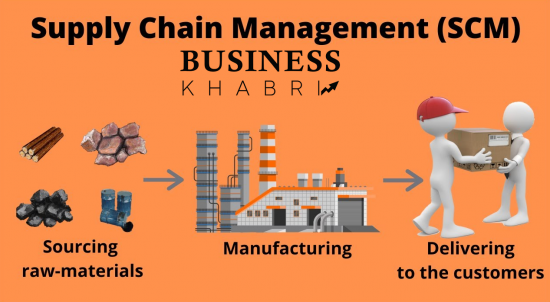
Supply chain management (SCM)
Look around you. Basically, nothing in your home or workplace would be there without supply chains. Hundreds of millions of jobs around the world are linked to these activities. From inexpensive consumer goods to surgical equipment and vital resources, everything comes through a supply chain. Yet despite SCM being at the core of global economies, many companies are still running their supply chains with the same processes and machines they have been using for 50 years.
Improved SCM practices can transform businesses. Companies can become more competitive by minimizing waste and surplus while lowering costs and increasing efficiency. They can boost customer loyalty by offering personalized logistics that meet individual preferences. And they can automate their processes to be faster, smarter, and more productive.
Some of the core SCM processes include:
a. Supply chain planning is the process of anticipating product demand and coordinating the links in the supply chain to deliver it. In addition to demand forecasting and planning, it includes supply planning, materials requirements planning (MRP), production planning, sales and operations planning (S&OP), and more.
b. Product lifecycle management (PLM) is the process of managing a product throughout its entire lifecycle – from ideation, engineering, and design to manufacture, service, and disposal (or recycling). PLM software systems bring these processes together, facilitate enterprise-wide collaboration, and provide a product information backbone for every product across its lifecycle.
c. Procurement is the process of acquiring materials, goods, and services to meet business needs – and ensuring the quality, fair price, and value of those goods. A major challenge for procurement and sourcing teams is anticipating accurate order volumes, as both shortages and surpluses can be damaging to the business. SCM systems that incorporate machine learning and predictive analytics can help eliminate guesswork in procurement and purchasing.
d. Logistics management is the transportation and storage of goods from the start of the supply chain, with raw goods and manufacturing, to the delivery of finished products to stores or customers – and even on to product servicing, returns, and recycling. The business functions involved include inbound and outbound transportation management, fleet management, warehouse management, inventory control, and customer service.
e. Manufacturing execution management (MES) monitors, tracks, documents, and controls the process of manufacturing goods. It keeps production and processes as lean as possible – while maintaining (and improving) quality, sustainability, and customer satisfaction. The system uses data gathered from AI and Industrial IoT-powered systems to streamline and automate manufacturing processes. Companies can use on-demand 3D printing to eliminate shortages and surplus, and smart machines to deliver mass customization economically. Benefits include improved quality management, increased uptime, reduced inventory holding cost, a paperless shop floor, and improved product tracking and genealogy. These systems also help to ensure that the latest compliance and regulatory practices are in place.
f. Enterprise asset management is the process of managing and maintaining physical assets across the supply chain, from factory robotics to delivery fleets. IoT sensors, machine-to-machine (M2M) connectivity, and digital twins are transforming EAM, improving efficiency, uptime, safety, and preventive and predictive maintenance. Some connected assets can even anticipate repairs or breakdowns and perform maintenance on themselves – right down to sourcing and ordering the parts they need to extend their lifecycles.
Benefits of supply chain management:
#Businesskhabri
#MBA zone
#Businesskhabridotcom
Blog ID : 1043
If anyone feel the content of this post is not in community guidelines, It may be considered upsetting, offensive, or sensitive. then please help us to report this.
Report to admin